Module 2: HVAC Fundamentals

Module 2: HVAC Fundamentals Featured Image

Module 2: HVAC Fundamentals
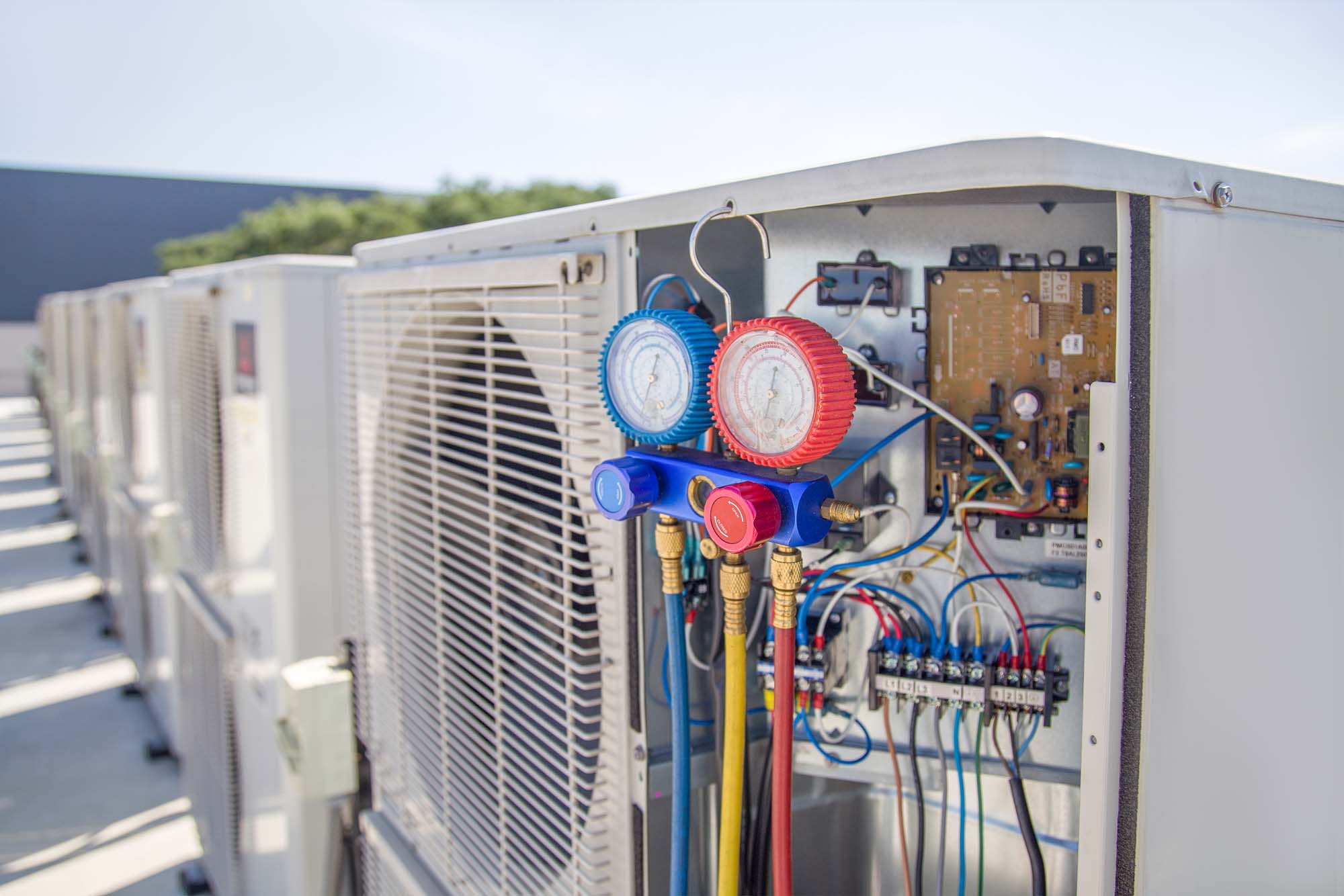
Heat doesn’t move by accident — and neither does air. Module 2 builds the technical foundation every HVAC technician needs, covering the physics of heat transfer, the refrigeration cycle, psychrometrics, and air distribution systems.

More Information

Description & Topics

Before you can diagnose a system, you need to understand what it’s actually doing. Module 2 takes you inside the science that drives every piece of HVAC equipment you’ll ever work on.

You’ll start with the fundamentals of heat transfer — conduction, convection, and radiation — and learn how these principles govern the way HVAC systems move energy from one place to another. From there, you’ll trace the refrigeration cycle step by step, understanding what happens at the compressor, condenser, metering device, and evaporator, and why each stage matters.

The module then introduces psychrometrics: the study of air and moisture. You’ll learn to read a psychrometric chart, understand dew point and relative humidity, and see how this knowledge directly affects comfort, efficiency, and equipment selection.

Finally, you’ll explore air distribution systems — how conditioned air is moved through a building, how ductwork is designed and sized, and what goes wrong when airflow is compromised. By the end of this module, you won’t just know how to follow a procedure. You’ll understand why the procedure works.

Before you can diagnose a system, you need to understand what it’s actually doing. Module 2 takes you inside the science that drives every piece of HVAC equipment you’ll ever work on.

You’ll start with the fundamentals of heat transfer — conduction, convection, and radiation — and learn how these principles govern the way HVAC systems move energy from one place to another. From there, you’ll trace the refrigeration cycle step by step, understanding what happens at the compressor, condenser, metering device, and evaporator, and why each stage matters.

The module then introduces psychrometrics: the study of air and moisture. You’ll learn to read a psychrometric chart, understand dew point and relative humidity, and see how this knowledge directly affects comfort, efficiency, and equipment selection.

Finally, you’ll explore air distribution systems — how conditioned air is moved through a building, how ductwork is designed and sized, and what goes wrong when airflow is compromised. By the end of this module, you won’t just know how to follow a procedure. You’ll understand why the procedure works.